← Back to Allie's Digital Garden
An adult playthrough of Kentucky Route Zero
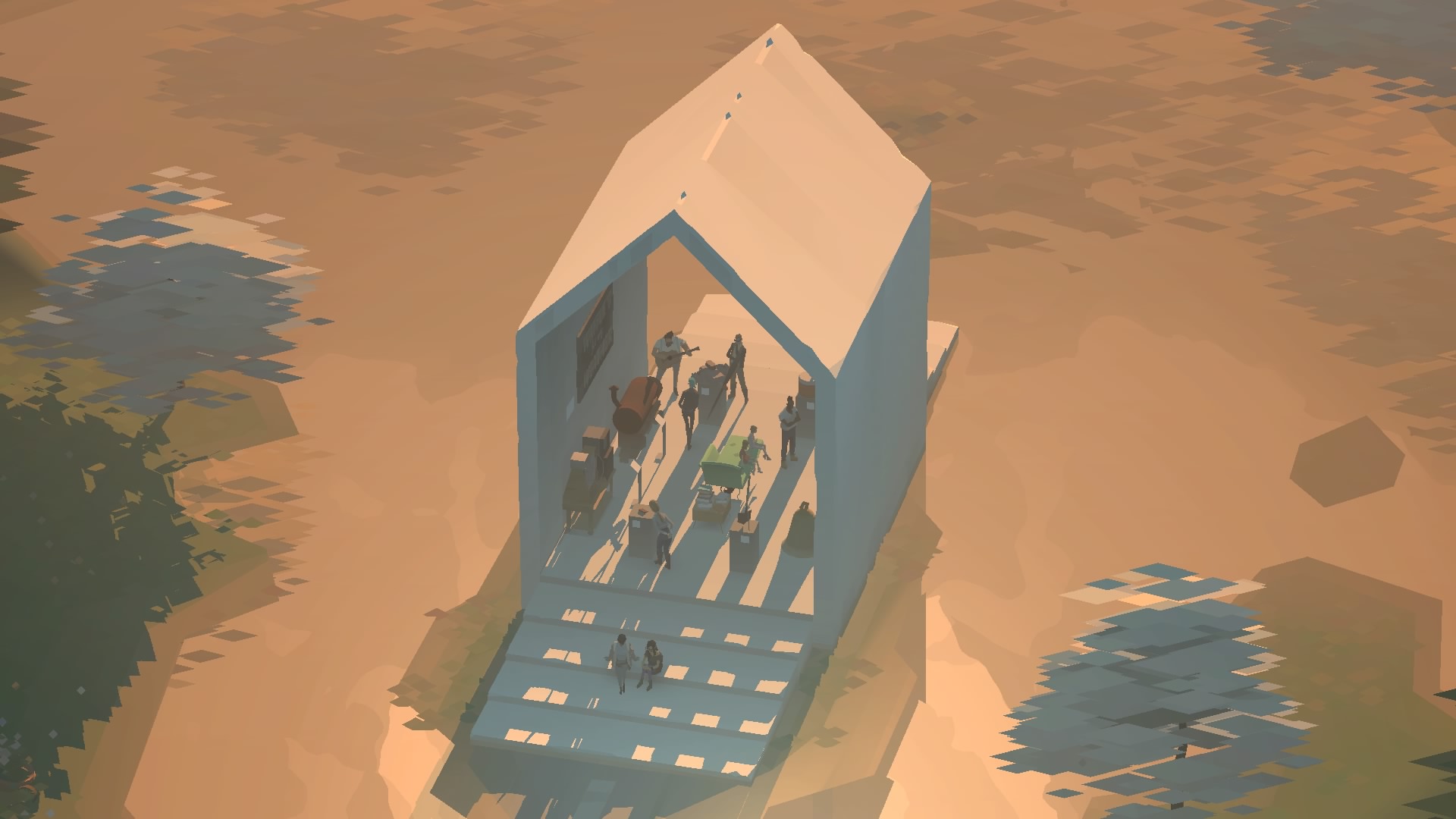
Last month, I replayed Kentucky Route Zero. Originally, the game was released in five episodes and four (+1 secret interlude) shorter interlude episodes over the course of almost a decade. This was my first time playing the game from beginning to end—- originally, I played the first few episodes and then the last two as they were released. I also initially played the game on PC but wanted to give the semi-new console release a go.
I think I'm better situated to appreciate this game for what it is now that I'm older than I was when I first played it in college. This game feels relevant and will likely always feel relevant (unfortunately) to the experience of labor in America. In this game, time is a loop, labor trends are a loop, debts are a loop, birth, death, and rebirth cycle over and over again. I think these messages are just as relevant now in 2024 as they were when the game's first episode was released in 2013.
To me, this game is one of the best ever made. The visuals are absolutely stunning, the writing is gorgeous, thoughtful, and engaging, and the music is perfect and often a main focal point.
There's honestly a lot that I want to say about this game, so I am going to. This game is an absolute masterpiece, and I think it's a game that I'll return to over and over again throughout my life. Obviously, KR0 is a game, but it kind of feels more like a book. Or a piece of artwork. The game itself acknowledges that it's toeing the line of "game" and "artistic experience." Because of this, I think KR0 can be enjoyed by gamers and non-gamers. In a lot of ways, the main gameplay mechanic of this game is curiosity.
Referencial Debt
This game is full of references to the history of math, media, games, computing, and theater. A lot of it goes over my head, but I'm kind of happy about that. Knowing all the references in this game, in my personal opinion, would probably end up making me feel like some things were hamfisted together. I think the gaps in my knowledge end up making the references I do pick up on feel deeper and more meaningful.
This is a game about debts, both in plot, theme, and references. From my point of view, references in this game are used to situate the game itself in a position of debt/indebtedness to the long history of art, games, theater, philosophy, and software that this game aligns with.
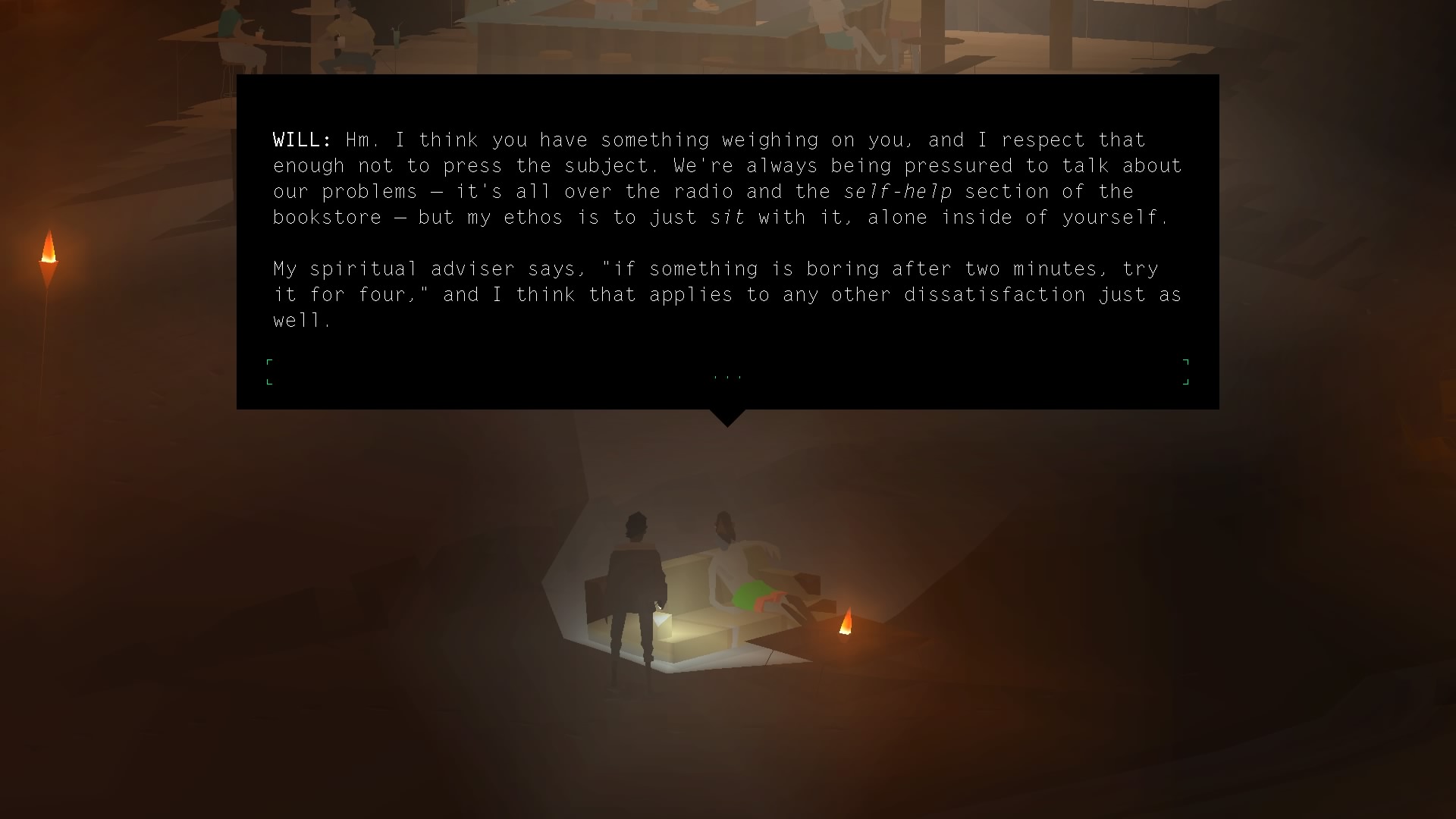
Will quoting John Cage
Speaking your lines as your write the play
The dialogue system in this game is really awesome. If you've ever read anything about this game, you've probably heard something about the dialogue system. In most games, when you are given dialogue choices, the conversation will return to a point where you can select the other dialogue choices and explore each conversation tree thoroughly. Choice options in games also usually lead you down a path towards one of multiple available endings.
In KR0, when you select a dialogue option, there is no option to explore the different dialogue trees. When you select a dialogue option, it becomes canon to the game. This is done visually really well in that when you select a dialogue option, the text you've chosen just kind of floats up to join the game text, as if it was part of the game all along.
You make choices, and pretty much never can circle back and explore other options. There are no "good" or "bad" options that you can strategize with, and there are no "good" or "bad" endings to work towards. There are simply choices. The game tells you this from the get-go. In the first scene of the game, you encounter some people playing a tabletop game. One of them makes a comment, "I don't think you can win. It says on the box it's a tragedy."
You are an actor playing the characters in this game. You can decide, to an extent, how your Conway reacts and responds to the world, but you cannot influence the world, or even Conway's ultimate circumstances. This reflects the overall theme and plot of the game super well. These characters are systemically disempowered, and their lives are subject to the whim of the society they exist in—- one that is experiencing gentrification, corporate takeover and economic consolidation. These are people who do not have the privilege of do-overs.
Jake Elliot, one of the creators of the game, sums it up really well:
"I think we were thinking about telling a story about people who aren’t necessarily in the position to strategize. They are responding to their conditions, and they are people who are, in their nature, more curious than aggressive or forceful. We want the player to be in a state where they’re asking characters questions about themselves, just inquisitive and curious."
Moments that stick
There's so much in this game, I wish I had written this blog post as I was playing through. It's hard for me to point to individual scenes that really encompass what this game is about, which would make this post much easier to craft. Rather than a game of few standout, impactful moments, the impact is embedded into every conversation.
I just want to call out some moments in this game that I found really meaningful, beautiful, fun, or just enjoyable. I'm not going to give much context to these scenes—- the game is way too big and complex to set up the context of these scenes in any helpful way. Maybe play the game and come back to this section ;)
Act I: Unlocking Joseph's computer with a poem
In the first scene of the game, you ask the gas station attendant for an address that he has on his password-locked computer. He tells you that he can't remember the password and that "it's kinda long, kinda like a short poem, I think. One of those short poems that really sums it all up. You'll figure it out."
You then go to his computer, and basically just write a poem to get into his computer. There is no correct password; you get into the computer no matter what poem you compose. I love this moment. It sets up the dialogue mechanics perfectly, and it's just a really charming moment that allows you to contribute creatively to this world right off the bat.
Act II: Lula Chamberlain in Act II
Lula's character cracks me up in this act. The act opens with her reading an art residency rejection letter. Her bitter response to the letter is so funny and relatable and a departure away from the previously slow, uncanny feeling of the end of Act I.
Just before this act in the interlude between Act I and Act II, "Limits and Demonstrations," you walk around a museum exhibit full of experimental artwork that Lula has created. It's darkly ironic that in "Limits and Demonstrations," you have just gotten to explore an exhibit of Lula's weird, esoteric, experimental artwork and then are suddenly shown Lula working an office desk job. Feels real...
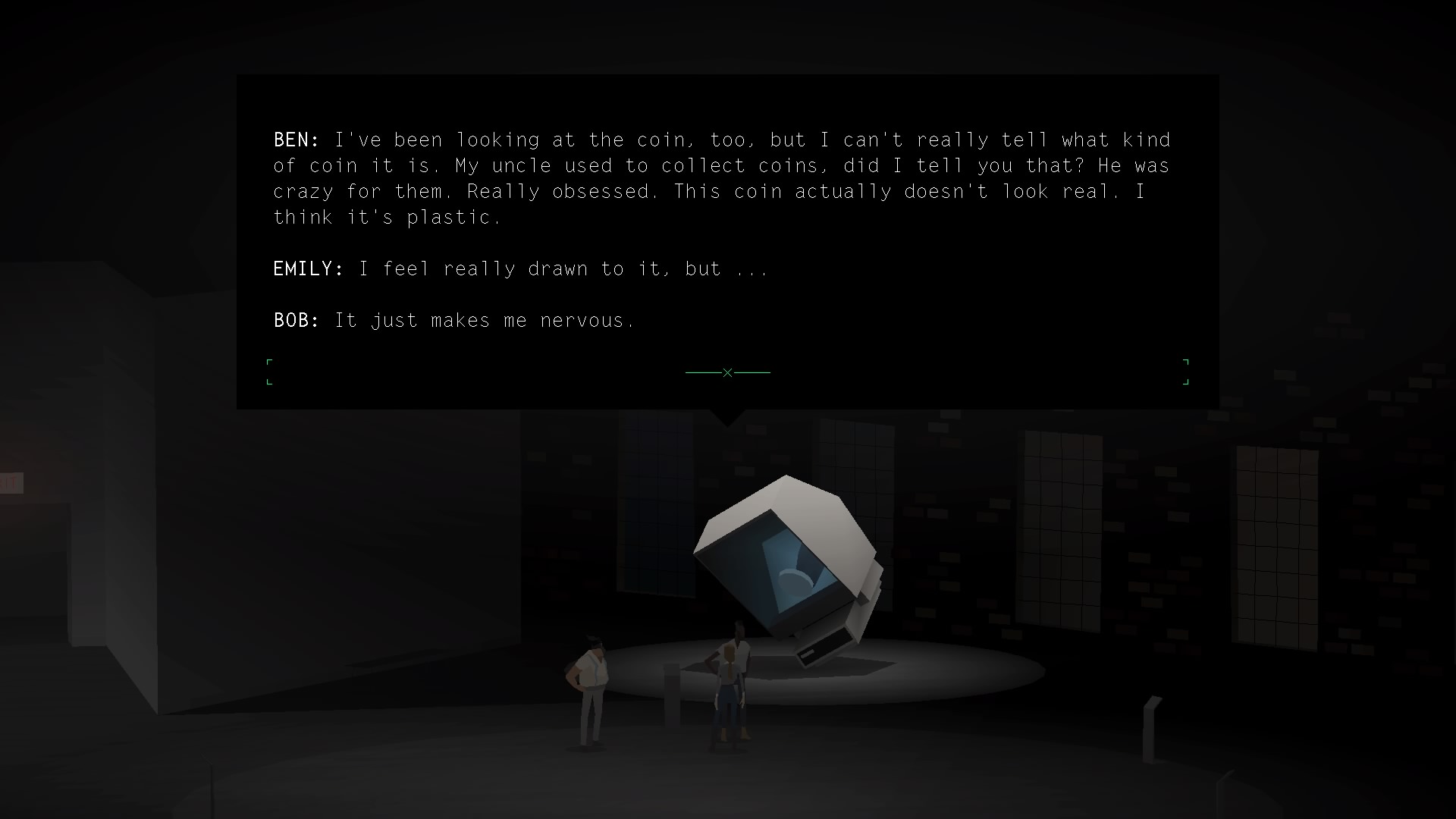
one of Lula's pieces in Limits and Demonstrations
Act II: Janitor conversation
On your bureaucratic quest to find some documentation to find the house that you are supposed to make a delivery to, you encounter a janitor who works at a church-turned-storage-facility. You have a brief conversation with him where he tells you that he still plays the slideshows and recordings of sermons that the church would always play, even though no one attends anymore.
To me, this conversation is about human inertia outside of capitalism and a commitment to continued community traditions and spaces. There's a notion that without capitalism, people wouldn't be motivated to do anything. There would be no innovation, and no one would be incentivized to improve themselves or their communities. Personally, I could not disagree with this sentiment more. Sure, capitalism provides a route for large, widespread innovation in the form of companies, but community and personal level contributions exist and thrive outside of capitalism. The church is long gone, and the building is reclaimed by The Bureau, yet this janitor continues the tradition of creating this community space because he finds meaning in the practice.
I love this quote from Brandon, the janitor, in this scene:
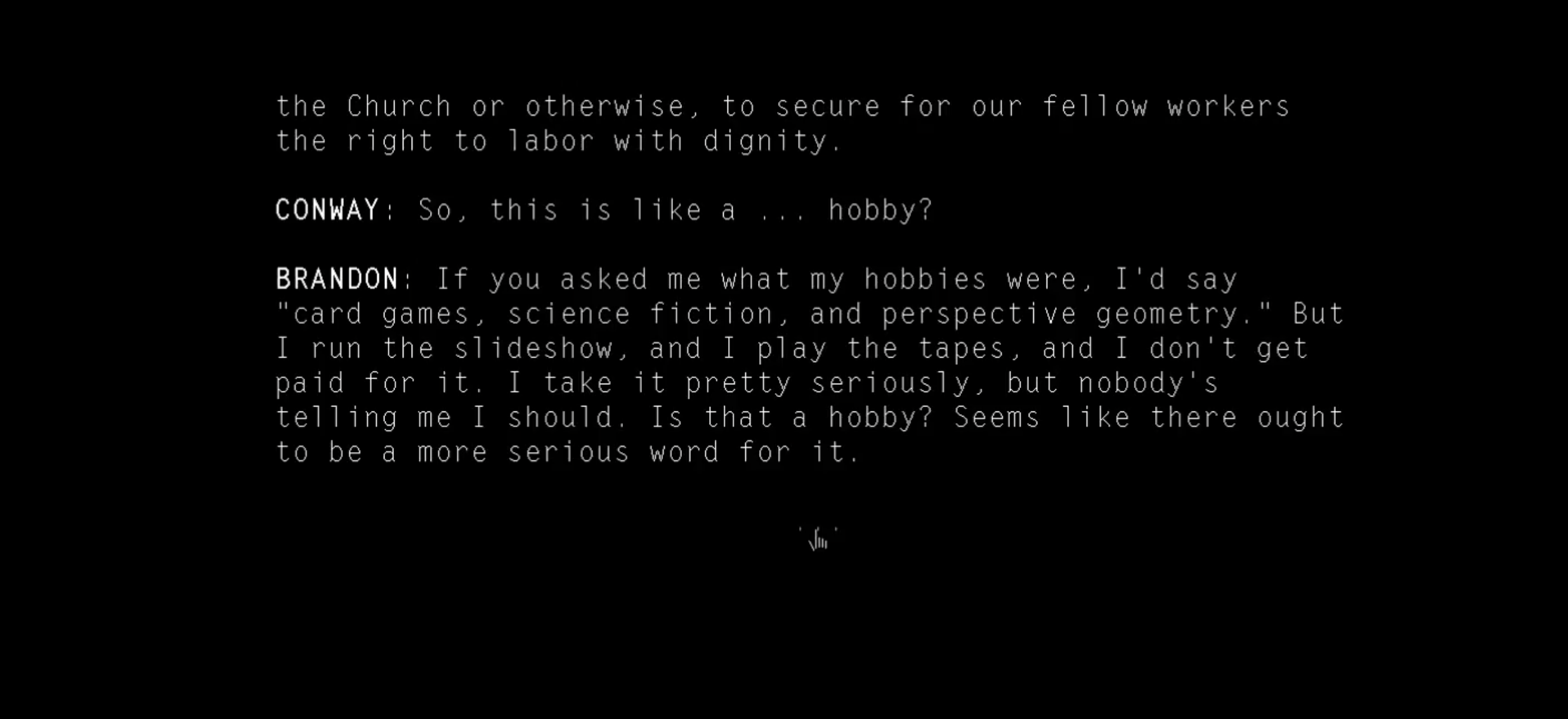
"If you asked me what my hobbies were, I'd say "card games, science fiction, and perspective geometry." But I run the slide show, and I play the tapes, and I don't get paid for it. I take it pretty seriously, but nobody's telling me I should. Is that a hobby? Seems like there ought to be a more serious word for it."
Act III: Ezra and Conway running
This moment is so cool to me from a game design perspective. You are controlling Conway who is running around a parking lot after his leg operation with Ezra following him. It's a gorgeous scene-- Conways and Ezra's reflections are really beautifully reflected off of puddles on the ground giving the effect that you are running through the stars. At some point, the character you are controlling shifts from Conway to Ezra without you as the player realizing it. It's a seamless shift that happens at an unidentifiable point.
I love the artful mechanics of this moment so much. It reminds me of one of my favorite literary moments in the book "Mrs. Dalloway" by Virginia Woolf. "Mrs. Dalloway" is a book written in stream of consciousness. There is a really cool moment in the book where two characters are walking towards each other on the street, and in the moment that they pass each other, the stream of consciousness prose seamlessly hops from one character to the other. It happens almost without you realizing it until you are a few sentences past. I love that moment, and I love this moment in KR0.
KR0 does a really great job of making the game feel like it's about an ensemble of people, not just Conway and Shannon, and I think this moment is a really nice example of that.
Act III: Conway sells his soul and takes a drink
Man, this is the most devastating moment in the game. Conway and Shannon end up at the Hard Times Whiskey Distillery and are hired, kind of by force (think indentured servitude...). At the end of your tour of the distillery, you are given a shot of whiskey, a tradition that the "Distillery Boys" do before each shift. Up to this point in the game, there have been many hints at Conway's alcoholism, but he hasn't fallen off the wagon yet.
In this moment, when you are handed the shot, you are given one action option: to take the shot. You actually have two options here: You can click the button to take the drink or you can not click it. In the PC version of the game, your mouse edges closer and closer to the "take a drink" button without you doing anything. In the console version, the action button fades away slowly if you don't click it. Whether you click it or not, Conway takes a drink.
This removal of control over Conway is honestly a violent game design decision. It's brutal to have Conway taken away from you as the player. This is the last point in the game where you play as Conway.
Act IV: Conversation with Poppy
My favorite quote of the whole game is in this conversation:
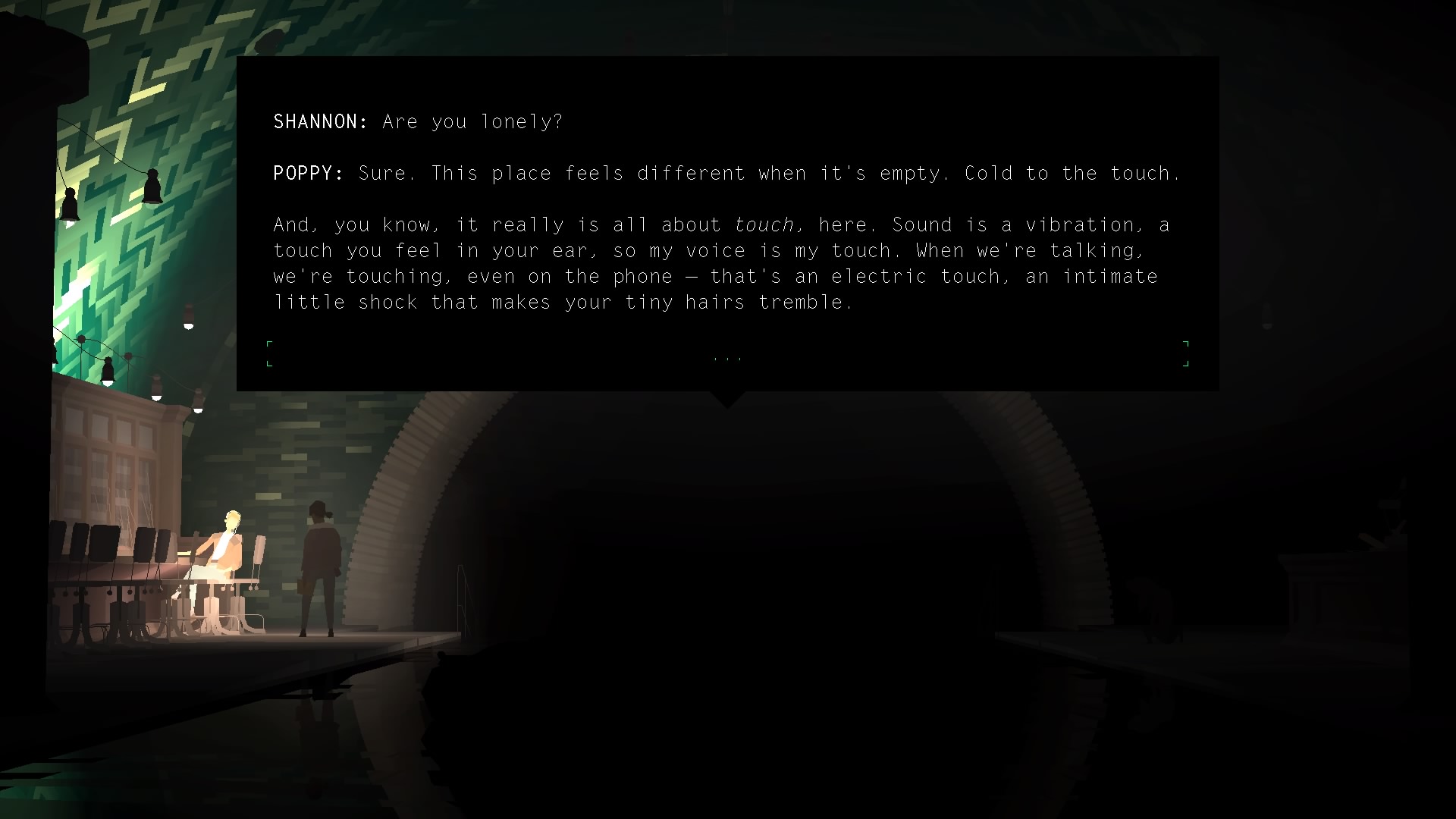
It doesn't have quite the emotional impact taken out of context like this. The interlude before this act is a really incredible phone auditory adventure (you can play it in game, or call an actual phone number!), and the entire act emphasizes the impact of sound. Within all this context, this line just really hit me like a truck.
This conversation also has some really interesting lines in it:
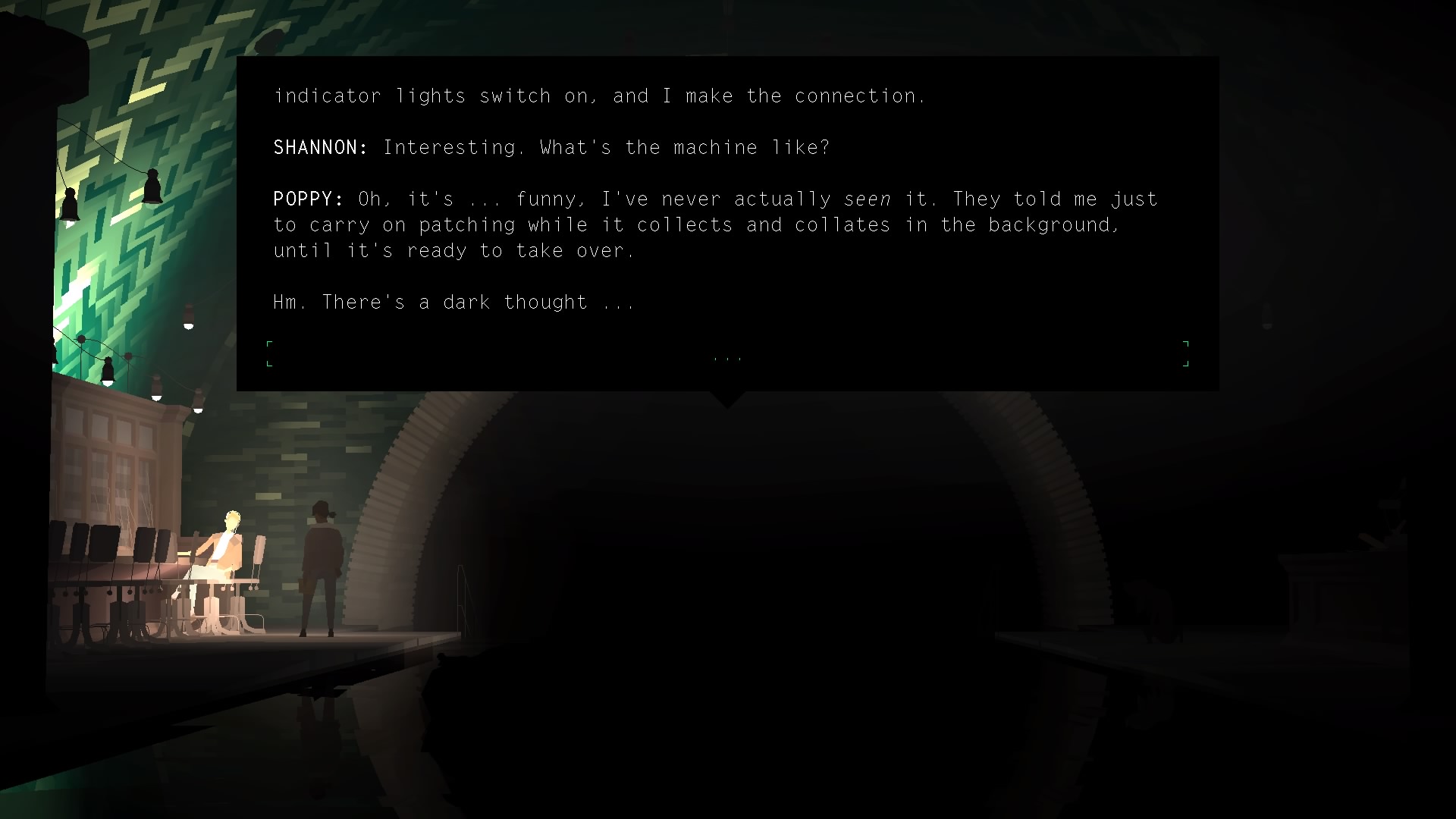
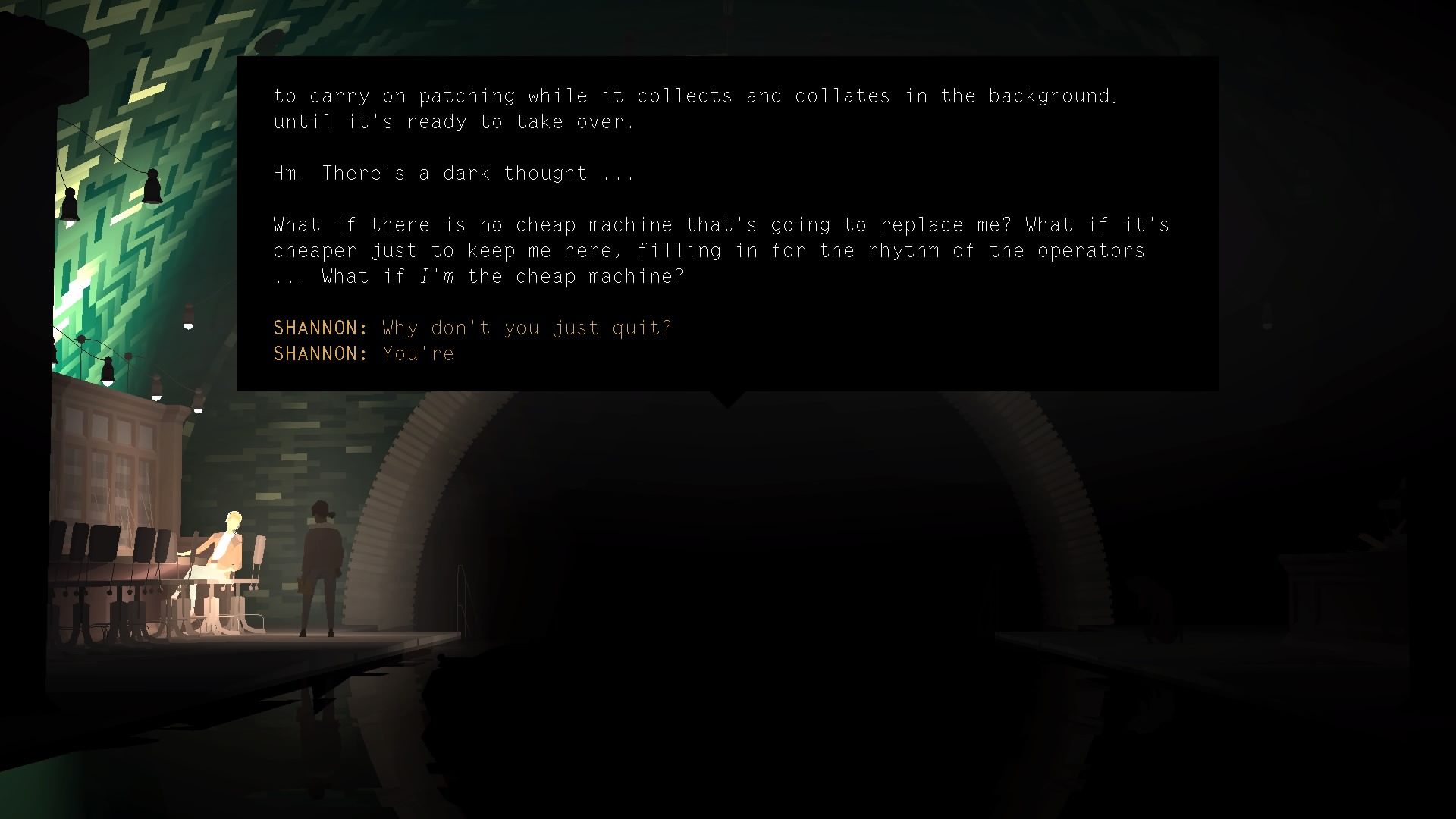
I think these lines when written were in reference to corporations recording phone conversations to set up their automated systems (when you hear "This call may be recorded for training purposes," it's not about training human employees). I think in 2024, it's a conversation about AI and data collection and the value of human labor vs. machine labor.
Final thoughts
The end of this game is so interesting. It seems like throughout the entire game, the big bad is a bloated capitalism that both creates and leaves a trail of disenfranchisement. In the final act of the game, you end up in a town that the Power Company left behind, leaving the town members to create their own form of society.
Coincidentally, I've been reading the book "How To Do Nothing: Resisting the Attention Economy" by Jenny Odell. Just a few days before getting to Act V in KR0, I read a chapter in this book that outlined the history of a few different groups that tried to remove themselves from society and build a sort of "utopia." These groups ultimately either fizzled out or fell into some really dark, destructive patterns.
You expect the resolution of the game to be that this town is a utopia thriving after The Consolidated Power Company removed itself. Through memories, you get a picture of a town that, in some ways, is thriving, and in other ways has some really dark things going on.
I have a few thoughts on what this final act means. The first is that rebuilding in the wake of a destructive capitalist force is very hard. And its tendrils remain even in the best efforts to build a different kind of society. Once a population has experienced disenfranchisement, the trauma lingers and informs every individual's survival techniques moving forward. The collective trauma of disempowerment is carried on by a people.
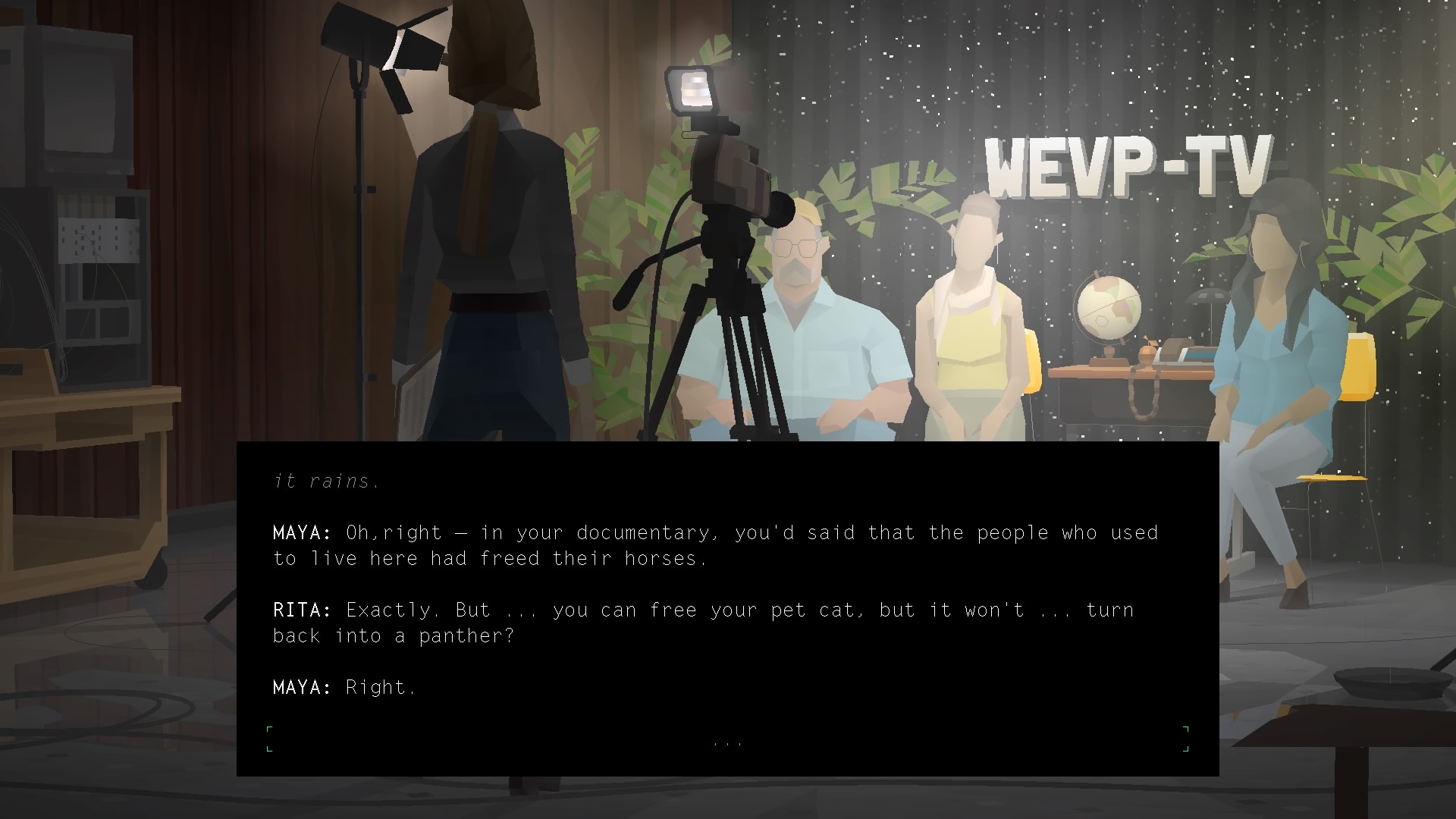
"you can free your pet cat. but it won't...turn back into a panther"
The second message that I get from this final scene is that in the lack of a clear bad guy vs. good guy ending, the real outcome is somewhere in the gray in between. This game is really about existing in in-between spaces, both literally in the more magical realism elements of the game (traveling the zero, the persistent confusion about if you are inside or outside in many scenes, etc), and thematically. You are not Conway or Shannon, you are Conway, Shannon, Junebug, Will, Ezra, Johnny, and all the other characters representing their own outlooks on life.
On the one hand, there is a lack of satisfaction of a clear resolution in the game where you get to whole-heartedly condemn The Consolidated Power Company and the systems that put them in power. On the other hand, it's much more realistic that the "solution" is not necessarily a full exodus from society as it exists.
In the final act of the game, you get to make several decisions about the outcome of each individual character. You make dialogue choices to either indicate that they will stay in the town and rebuild after a destructive storm or leave the town. This decision is not a decision between "good" and "bad." Leaving the town or staying to rebuild are both presented as valid, morally equivalent options.
This game is a tragedy, just like it says it is in that very first scene with the Basement People. If you stay to rebuild the town, all histories point to a cycle of advancement and then decline. If you leave the town, you continue on in the decline stage of the society you've been living in, taking on the daily trauma of inevitable debt.
And even though these tragedies are true, I do think that this game is also hopeful. It's both.
There is hope in the prospect of a rebirth and the rebuilding of a fallen society where you aim to build upon the successes and failures of your predecessors. And even though your society will fall prey to the circular cycle, the continuation of the cycle is itself hopeful.
Alternatively, forging on in a society that continually preys upon your stability, your ownership, and even your body (i.e. Conway's body more or less becoming the property of the Distillery), can be honorable and fulfilling. In "How To Do Nothing," Odell argues that a full departure away from society is not the way to combat broken societal structures. It looks more like the janitor continuing to play church sermons despite his change in employer, and Shannon (if you send her back out into the world), continuing to fix people's old CRTV's. There are grassroots, community-oriented ways to carve out your own utopia within a collapsing system. I have to see this path as hopeful because it's the life that me and all of my friends are living.
Please play this game
This game is so incredible. I wish everyone in my life would play it. I think everyone in my life could play it. You do not have to have ever played a video game in your life to play it and find meaning in it. Like I said in the beginning of this post, the main game mechanic of this game is curiosity, a skill that we all have innate access to.
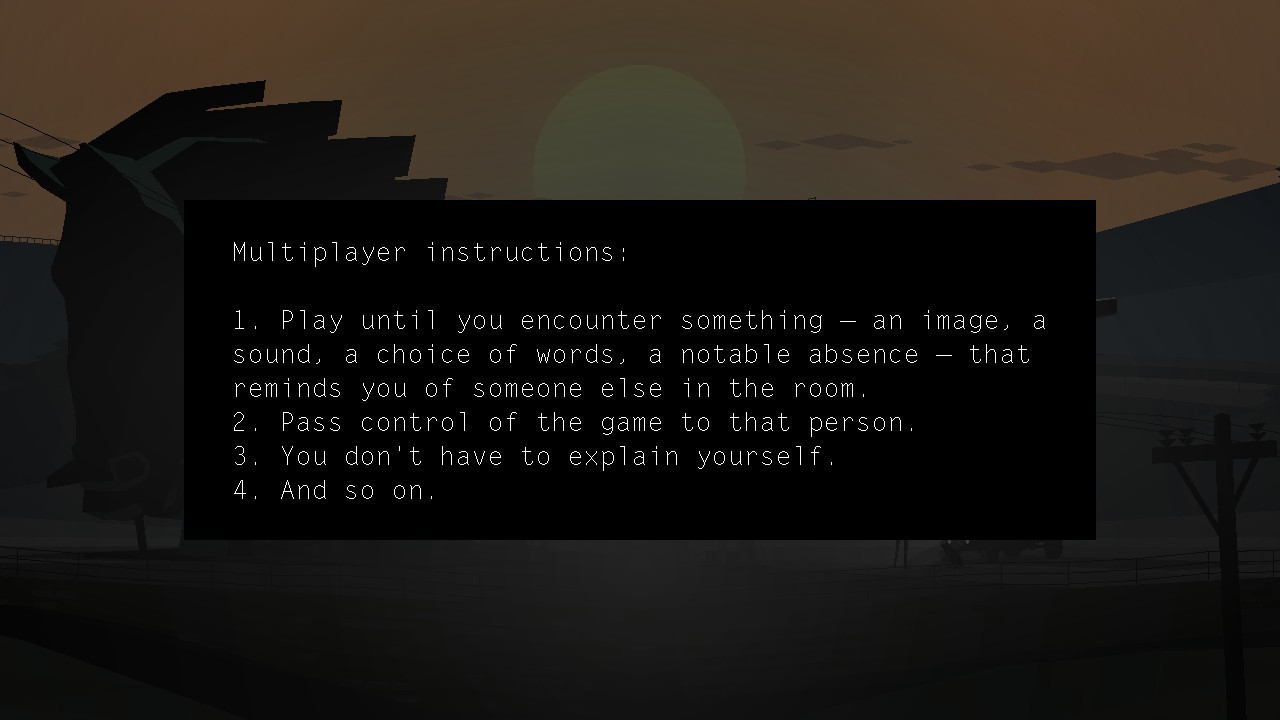
If anyone reading this ends up playing KR0 and feels like they want to experience it with someone else, please reach out to me to share your thoughts ^_^ The multiplayer mode would want you to!
Comments (0)
No comments yet.